

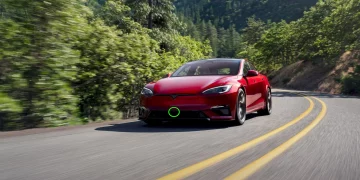






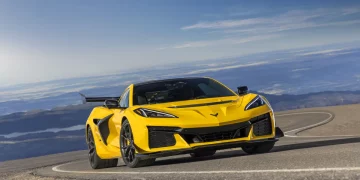



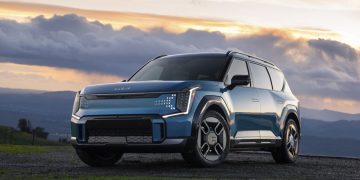


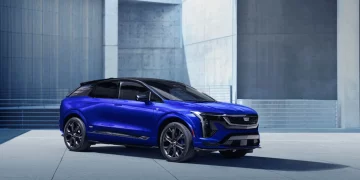










In 2025, the automotive world is set to witness a fascinating evolution in supercar design. The classic image of a supercar — high speeds, raw power, and engine roars — is no longer the only priority for carmakers. With the world increasingly focused on sustainability and environmental consciousness, manufacturers are now seeking ways to combine speed and eco-friendliness in the same vehicle. So, what happens when speed and sustainability collide in the world of 2025 supercars?
In this article, we will explore how supercar manufacturers are embracing green technologies to push the boundaries of performance while reducing environmental impact. From electric drivetrains to aerodynamic innovations and sustainable materials, we will dive into the exciting future of supercars that aren’t just fast but also environmentally responsible.
1. The Rise of Electric Supercars: Faster and Greener Than Ever
For decades, the supercar industry has been synonymous with powerful combustion engines, delivering exhilarating speeds and roaring soundtracks. However, with growing concerns over carbon emissions and stricter environmental regulations, the tide is turning in favor of electric vehicles (EVs).
1.1 Electric Motors: Redefining Supercar Performance
The fundamental shift from gasoline engines to electric motors is already taking place, with several high-performance supercar manufacturers leading the charge. Brands like Ferrari, Porsche, and Lamborghini are developing fully electric supercars that promise not only sustainable driving but also unmatched performance.
Electric motors offer significant advantages over traditional internal combustion engines, including:
- Instant torque: Unlike gasoline engines that need to build up power, electric motors provide instantaneous torque, resulting in rapid acceleration and incredibly fast lap times.
- Efficiency: Electric drivetrains are far more efficient than their gasoline counterparts, converting more energy from the battery into forward motion, thereby increasing performance while lowering energy consumption.
- Lower emissions: Zero-emissions driving is a key feature of electric supercars, helping reduce the carbon footprint associated with high-speed driving.
The 2025 era will witness electric supercars not just being a viable alternative, but the preferred choice for performance enthusiasts. These cars will prove that electric drivetrains can be powerful, exhilarating, and extremely fast — even for the most discerning driving aficionados.
1.2 Advanced Battery Technologies: Extending Range Without Sacrificing Power
One of the biggest concerns with electric supercars has always been range. After all, high-performance vehicles require large amounts of power, which traditionally translates to larger batteries and shorter range. But recent breakthroughs in battery technology are changing the game.
Manufacturers are investing heavily in next-generation solid-state batteries and high-density lithium-ion cells, which offer several advantages:
- Faster charging: Solid-state batteries can be charged at much faster rates, significantly reducing downtime during long trips or track days.
- Lighter weight: With better energy density, modern electric batteries are becoming lighter, which is crucial for high-performance supercars that need to maintain an optimal power-to-weight ratio.
- Longer range: Improved battery technologies mean that electric supercars in 2025 will have sufficient range for long drives without compromising on speed or performance.
The combination of super-fast charging, increased range, and lightweight battery technology means that electric supercars will be more practical than ever before — capable of going from the track to the open road with ease.
2. Sustainable Materials: Building the Supercar of Tomorrow
Beyond powertrains, manufacturers are also turning their attention to the materials used in the construction of 2025 supercars. These high-performance vehicles are often built using exotic materials to reduce weight and enhance durability. However, the next generation of supercars is increasingly focusing on sustainable materials that contribute to environmental goals without sacrificing performance.
2.1 Recycled Carbon Fiber: Lightweight and Eco-Friendly
Carbon fiber has long been a material of choice for supercar manufacturers due to its exceptional strength-to-weight ratio. However, producing traditional carbon fiber is energy-intensive and results in a significant environmental footprint. To address this, recycled carbon fiber is gaining traction.
Recycled carbon fiber is sourced from discarded aerospace components, older vehicles, or carbon fiber manufacturing scraps. By reusing this material, manufacturers can reduce the environmental impact of carbon fiber production while still maintaining the lightweight characteristics needed for high-performance vehicles.
2.2 Bio-Based Composites and Sustainable Leather
In addition to recycled carbon fiber, bio-based composites are also becoming a staple in the production of luxury interiors. Materials such as flax-based composites or hemp fibers are being explored as sustainable alternatives to traditional synthetic materials, offering the same performance and aesthetic qualities as their non-renewable counterparts.
For luxury car interiors, designers are opting for vegetable-tanned leather and sustainable fabrics that provide the same premium feel as conventional leather but with a much smaller ecological footprint. These materials combine luxury and eco-consciousness, making them ideal for the sustainable supercar of the future.
2.3 3D Printing: Reducing Waste and Customizing Performance
3D printing technology is revolutionizing the way supercars are built. Not only does 3D printing enable more efficient production with less waste, but it also allows for the customization of vehicle components. Supercar manufacturers can now print parts with materials such as aluminum or titanium, further reducing the carbon footprint associated with traditional manufacturing processes.
Moreover, 3D printing allows for lightweight structural components, which is crucial in achieving the high performance that supercar enthusiasts expect. Parts can be precisely designed and manufactured to ensure optimal aerodynamic properties and strength, making them ideal for track-ready performance.
3. The Carbon Footprint of Supercars: Striking the Right Balance
While electric supercars represent the future of high-performance vehicles, there’s still the question of their overall carbon footprint. While these vehicles do not produce emissions during operation, their production process — particularly the manufacturing of large battery packs — can still have significant environmental impacts.
3.1 Sustainable Manufacturing Practices
As supercar manufacturers embrace electric propulsion, they are also looking at more sustainable manufacturing practices. For instance, companies are investing in renewable energy sources for their production lines, using solar panels, wind power, and hydropower to power factories. This significantly reduces the overall carbon footprint of producing these high-performance machines.
3.2 Offset Programs: Compensating for Emissions
In an effort to further offset their environmental impact, some supercar manufacturers are beginning to invest in carbon offset programs. These programs may include planting trees, funding renewable energy projects, or investing in carbon capture technologies to balance the emissions produced during the manufacturing process.
In 2025, we are likely to see more supercar brands adopting these eco-friendly initiatives, helping to mitigate the environmental costs of producing these high-performance vehicles.
4. Performance vs. Sustainability: Can They Truly Coexist?
As the world of supercars evolves, the balance between performance and sustainability will continue to be a central point of debate. Can a car that pushes the limits of speed and agility also be eco-friendly? The truth is, there will always be trade-offs. Some performance enthusiasts may argue that a fully electric supercar can never quite match the raw emotion and power of a traditional internal combustion engine. Others might argue that the future lies in sustainable performance, where innovations in electric drivetrains, materials, and manufacturing processes will ensure that high-performance vehicles don’t have to sacrifice the planet’s well-being.
4.1 The Need for Innovation
Ultimately, the key to reconciling these two priorities lies in innovation. The supercar industry has long been a hotbed for pushing the limits of technology and design. Now, as sustainability takes center stage, engineers and designers will need to think outside the box to develop supercars that can be both fast and green.
By focusing on alternative fuels, advanced battery technology, sustainable materials, and efficient production methods, the next generation of supercars will prove that speed and sustainability can coexist — and that the 2025 supercar will not only be a symbol of luxury and power, but also eco-consciousness.
5. Conclusion: The Future of Speed and Sustainability
The 2025 supercar is set to be a game-changer, where speed and sustainability collide to create vehicles that are faster, more efficient, and far less damaging to the planet. With advances in electric drivetrains, sustainable materials, and eco-conscious manufacturing, the high-performance vehicles of tomorrow will have the power to thrill drivers without the guilt of environmental destruction.
In the end, the 2025 supercar will embody the best of both worlds — combining performance with planet-friendly design to create the ultimate driving experience for the future.