
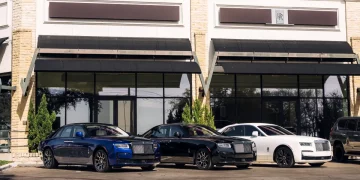
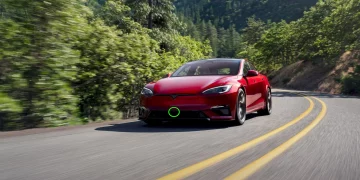


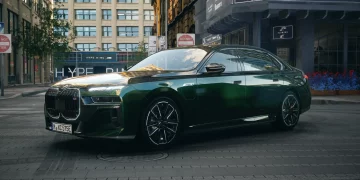
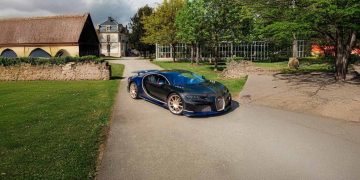

















In an era when automation rules and mass production has reached levels of near-perfection, something unexpected is happening in the realm of high-performance luxury: the revival of coachbuilt supercars. Once a relic of pre-war Europe, the coachbuilt car was traditionally a bespoke machine—its body handcrafted by artisans to wrap around a manufacturer’s chassis. Now, that age-old practice is returning with force, as brands like Aston Martin and Ferrari revisit the coachbuilding tradition for a new generation of ultra-wealthy collectors craving more than just horsepower. Today, exclusivity is no longer just about top speed—it’s about a car so rare that it only exists in photos, sketches, or on the keys of one owner.
Aston Martin Valour and Ferrari’s SP Program: Artistry in Motion
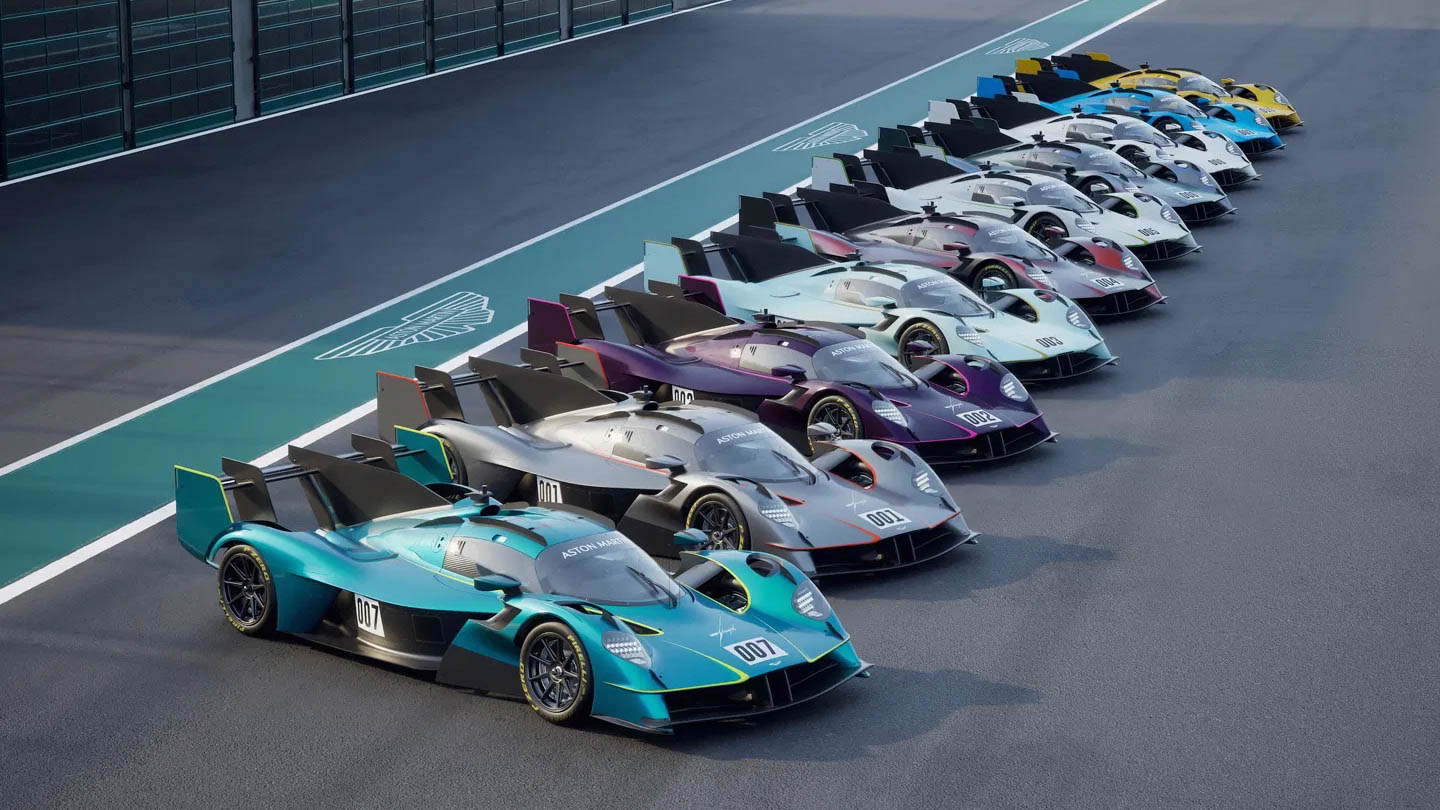
When Aston Martin unveiled the Valour in 2023, it wasn’t just a retro-inspired throwback to the brand’s 1970s V8 Vantage. It was a statement: limited to just 110 units, the Valour fused a modern carbon-fiber monocoque with analog driving purity and a hand-shaped exterior design that took cues from bespoke heritage models. Everything—from the exposed gear linkage to the grille shape—spoke to craftsmanship rather than mass-market engineering. It didn’t matter that Aston Martin already had faster, lighter cars in its lineup. The Valour wasn’t about numbers. It was about soul.
Ferrari’s Special Projects (SP) division takes this even further. Working directly with ultra-high-net-worth clients, Ferrari allows for the design and construction of entirely unique bodies atop familiar mechanical platforms like the F8 Tributo or 812 Superfast. The resulting SP models—like the SP3JC or the SP38 Deborah—are artistic interpretations of Ferrari heritage filtered through the lens of each client’s personal taste. These aren’t just customized Ferraris. They are singular sculptures, with one VIN, one story, and often, one massive investment return.
Back to the Essence: Craft Over Speed
Why this turn back to coachbuilding now? The answer lies in what mass production has taken away. While mainstream supercars—McLarens, Lamborghinis, and even Ferraris—have become more technologically refined, they’ve also grown more homogeneous. With shared platforms, wind tunnel constraints, and efficiency mandates, today’s high-performance machines can sometimes feel more like appliances than objets d’art.
Coachbuilding brings back imperfection, texture, and unpredictability. A handcrafted aluminum panel may not match the micron tolerance of an injection-molded body panel, but it carries with it a human fingerprint. To those spending over $2 million on a vehicle, that fingerprint matters more than a stopwatch time. In a digital age, coachbuilt cars offer analog romance. Each design choice, whether a double-bubble roofline or bespoke rear deck treatment, speaks to a level of attention that even AI can’t automate.
And it’s not just aesthetics. Coachbuilt projects often involve traditional panel-beating techniques, hand-trimmed leatherwork, and color formulas mixed for one client alone. These processes are slow, expensive, and deeply impractical—but that’s the point. In the upper stratosphere of luxury, the value lies in inefficiency. The more time and labor a car requires, the more mystique it accumulates.
Individuality as a Performance Metric
In the traditional world of performance car marketing, speed has always been king. 0 to 60 in 2.5 seconds. Nürburgring lap times. Top speeds edging past 300 mph. But for buyers who already own five or ten supercars, these numbers have become less exciting than the ability to say, “I have the only one.”
A coachbuilt car lets the collector move beyond brand cachet into personal mythology. A one-of-one supercar isn’t just a fast machine—it’s a rolling narrative about the owner’s taste, values, and creativity. Think of it as the difference between buying a $200,000 Richard Mille and commissioning your own tourbillon from an independent watchmaker. One signals status. The other broadcasts authorship.
This is especially true in emerging wealth markets like China, India, and the Middle East, where first-generation wealth holders are skipping over traditional luxury categories and demanding immediate personalization. A Ferrari with options is nice. A Ferrari that was never sold to anyone else, ever, is better.
Coachbuilding and the Return of Scarcity Economics
One of the most powerful forces behind this revival is simple economics: scarcity. In financial terms, coachbuilt supercars operate on the same psychological principle as blue-chip art. Their value is determined not by performance alone but by scarcity, narrative, and perceived irreplaceability.
A standard Ferrari 812 Superfast depreciates predictably after purchase. But an SP1 Monza or P540 Superfast Aperta, built in microscopic quantities, often appreciates—especially if it’s featured at Pebble Beach or auctioned by RM Sotheby’s years later. The rarity makes it “investment-grade,” not unlike a Warhol or a Patek Philippe Grand Complication.
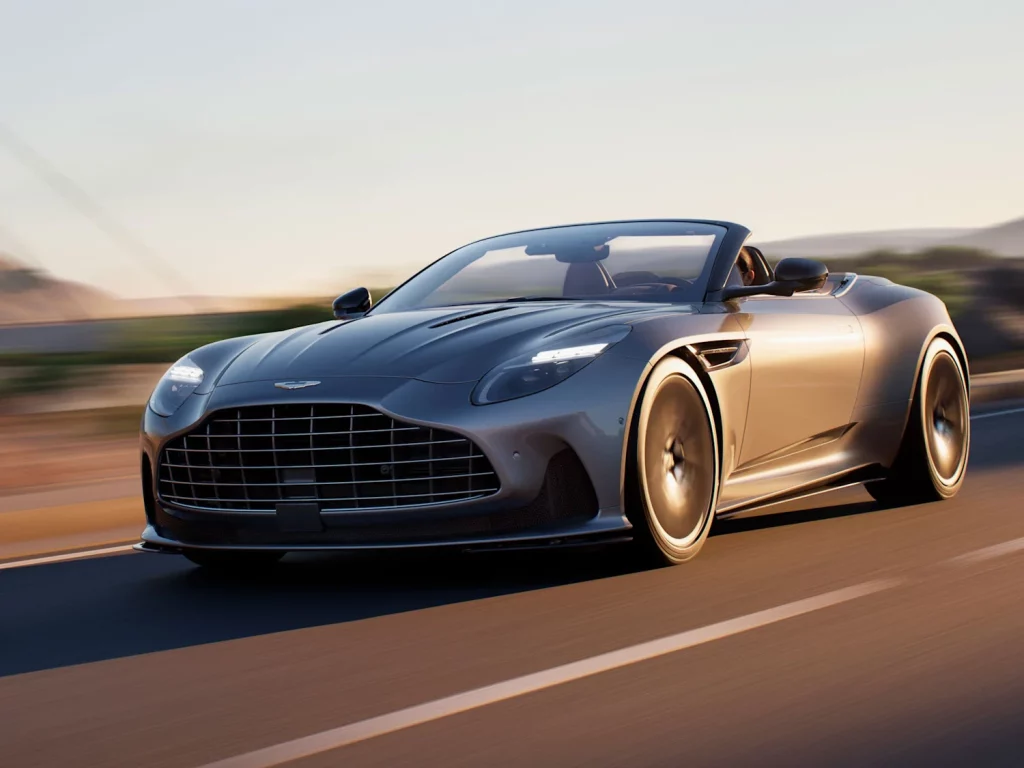
This appreciation is further fueled by social media. Instagram doesn’t need a car to be fast—it needs it to be rare, photogenic, and story-driven. Coachbuilt cars deliver that in spades. A one-off Aston Martin or Bugatti, captured in the golden hour outside Villa d’Este, isn’t just content. It’s digital currency in an attention economy where uniqueness outperforms utility.
From Assembly Line to Atelier: The New Role of Manufacturers
Automakers, especially those with historic racing or design legacies, are increasingly repositioning themselves as ateliers—part factory, part design house. Aston Martin’s Q Division, Bentley’s Mulliner, and Rolls-Royce’s Coachbuild program are all responses to the same trend: clients want more than personalization. They want co-authorship.
Ferrari’s SP customers typically undergo months of design reviews, full-scale clay modeling, and even archival research into past models. Bugatti’s La Voiture Noire—reportedly sold for $18.7 million—was not just a one-off hypercar; it was a high-concept sculpture, echoing the lost Type 57SC Atlantic.
These projects are expensive for the manufacturer, logistically taxing, and yield little in terms of direct revenue. But they do something more valuable—they cultivate brand mythology. Coachbuilt cars don’t just satisfy one buyer; they inspire thousands, reinforcing the brand’s commitment to artistry in an industry becoming increasingly digitized and modular.
The Triple Allure: Identity, Exclusivity, and Investment
At its core, the comeback of coachbuilt supercars is driven by three overlapping forces: the need for identity in a crowded luxury space, the emotional magnetism of exclusivity, and the logic of long-term value preservation.
In an age where anyone with enough capital can buy a hypercar, standing out requires rewriting the rules of ownership. Coachbuilt cars offer a rare path to emotional authorship in an asset class often defined by uniformity. They’re not about what the car does, but what it says—about history, personality, craftsmanship, and ambition.
And as governments tighten emissions regulations and software takes over vehicle control, coachbuilt ICE (internal combustion engine) supercars may also become the last of their kind. That makes them not only moving sculptures but cultural time capsules—investment-grade memories of how mechanical beauty once defied logic.
Conclusion
Limited-run coachbuilt supercars are no longer fringe novelties. They are fast becoming the haute couture of the automotive world—handmade, narrative-rich, and impossible to replicate. As performance specs become less of a differentiator and personal storytelling takes center stage, these machines represent more than speed or luxury. They are declarations of individuality forged in carbon, aluminum, and soul.
For the rarefied few who commission them, coachbuilt supercars are not transportation. They are transformation: from consumer to co-creator, from driver to icon, from machine to myth.