

Retaining the Ladder Frame and Locking Differentials in an EV Era
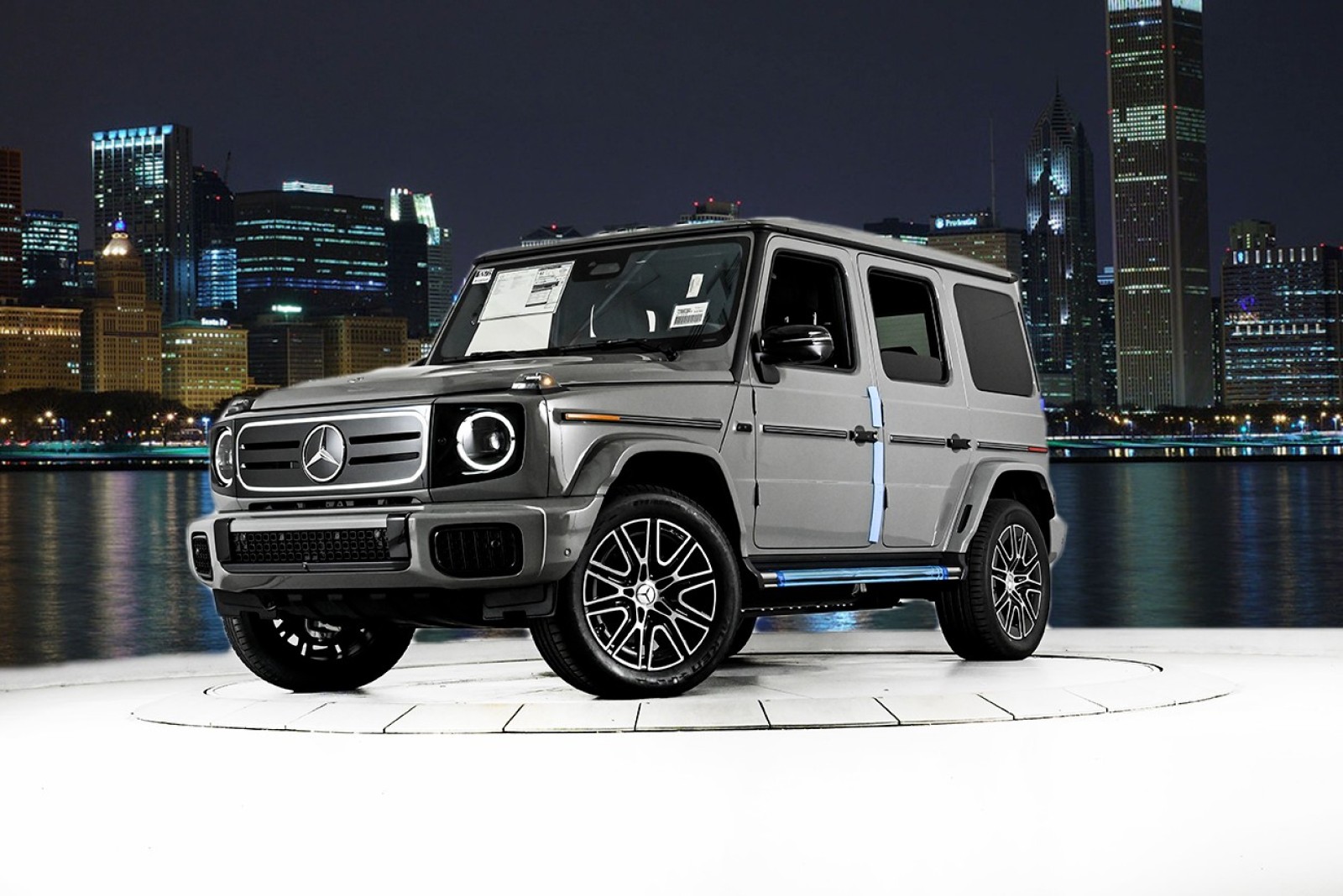
In an era where automakers are racing to strip weight, streamline silhouettes, and digitize every facet of driving, Mercedes-Benz took a surprisingly rebellious stance with the 2025 Electric G-Class. Internally known as the EQG before its final nameplate reveal, this machine doesn’t just electrify a classic—it defends it. At its core remains the iconic ladder-type frame, a structural layout often deemed too bulky or outdated for modern EV design. Yet for the G-Class, which has long worn its utilitarian DNA as a badge of honor, this architectural decision is less about nostalgia and more about preserving capability.
Unlike monocoque bodies that prioritize city efficiency and crash ratings, the ladder frame allows the electric G-Wagon to handle serious vertical articulation, torsional flex, and high-impact terrain abuse without compromise. It also enables Mercedes to fit four individually controlled electric motors—one on each wheel—within a traditional drivetrain layout, while retaining the G’s beloved three locking differentials. This triple-lock setup, paired with independent motor torque control, offers a level of precision in crawling and traction that even diesel-powered off-roaders dream of.
Mercedes engineers also developed a unique “tank turn” feature, allowing the EQG to spin on its axis using counter-rotating wheels—echoing tricks from electric Rivians but executed with true military-grade stability. For purists who feared that the G-Wagon’s soul would be scrubbed away by electrons, the EQG proves the opposite: its soul has merely been fortified with next-gen tech.
The Surreal Fusion of Digital Luxury and Analog Backbone
Step inside the 2025 Electric G-Class and it’s immediately apparent that Mercedes is telling two stories at once. One is steeped in tactile memory: upright windshield, prominent A-pillars, chunky grab handles, and the iconic exposed door hinges that make a G-Class a G-Class. The other story unfolds in pixels: a panoramic dual-screen MBUX cockpit display, biometric driver settings, and a customizable AI driving assistant that learns trail behaviors over time.
The juxtaposition between the tactile and the digital is not an accident. Designers intentionally retained the analog physicality of the G-Class while integrating future-forward features. Take the rotary drive mode selector: it feels like turning the dial on a submarine console, yet it unlocks advanced EV-specific modes like “Canyon Crawl,” “Silent Camp,” and “Eco Rock,” each adjusting torque output, regen braking aggressiveness, and terrain response.
Materials further this hybrid aesthetic. The cabin offers a choice between quilted vegan leather and heritage saddle-grade cowhide, and the dashboard lighting includes programmable ambient themes that sync with music and terrain profile. Even the classic rear-mounted spare tire cover—unchanged since the 1970s—now hides a fast-charging port beneath its center badge.
It’s a car that winks at its own contradictions. The EQG dares to be brutally analog in silhouette while being eerily digital in intelligence. It’s this balance that elevates it beyond just another electric luxury SUV—it becomes a manifesto.
EV Off-Roading as Identity: More Than Just Capability
The EQG isn’t alone in the EV off-road space. Rivian’s R1S, Hummer EV, and the upcoming electric Land Cruiser all compete in the rugged-luxury segment. But what separates the Electric G-Class is its attitude. This is not a reinvention—it’s a refusal. A refusal to conform to the “crossover blob” trend that dominates EV design. A refusal to water down capability in the name of efficiency. And most importantly, a refusal to treat electric propulsion as an excuse to erase history.
This positioning resonates deeply with a new kind of consumer: one who demands clean technology but not at the cost of soul. In global markets like the Middle East, China, and parts of Europe, where luxury buyers seek vehicles that make a statement beyond horsepower figures, the EQG’s unique blend of heritage and innovation hits a nerve.
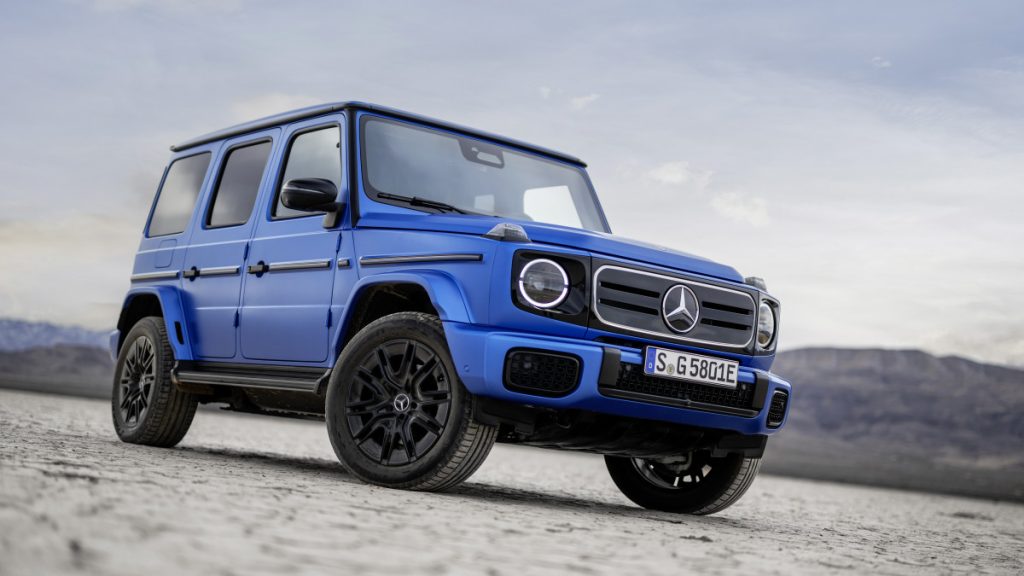
It’s also no coincidence that Mercedes plans to offer a limited “G-Class Founders Edition” with heritage color schemes from the 1979 model, including the outrageous “China Blue” and “Agave Green.” Buyers can even opt for a digital voice assistant with selectable personalities—one of which mimics the tone and phrasing of a 1980s German off-road instructor.
In the age of sterile, identical EVs, personality is the new torque. The EQG delivers both.
A High-Voltage Trailblazer for the Next Decade
From a technical standpoint, the electric G-Class is nothing short of a rolling laboratory. Its 100 kWh battery pack is fortified for rock impact, water immersion, and rapid thermal expansion—all critical in unpredictable off-road conditions. Mercedes has even developed a “G-Roof Solar Pack” option, offering supplemental trickle charging for camping scenarios in remote locations.
It’s also future-proofed for over-the-air performance upgrades. Early testers of the EQG have already noted that Mercedes is exploring a subscription model for enhanced crawl control, high-speed off-road suspension calibration, and even terrain-specific camera AI. In essence, the G-Wagon is becoming a software-driven adventure machine, with downloadable personality traits.
Environmental critics have questioned whether such a large, heavy EV can truly claim “green” status. Mercedes’ response is candid: no, the EQG isn’t a sustainability poster child—but it is a critical bridge. By converting one of the most fuel-thirsty luxury icons into a zero-emission flagship, Mercedes sends a loud message to loyalists and laggards alike: if even the G-Class can go electric without losing its identity, no excuse remains for the rest of the market.
Cultural Legacy in the Age of Electrification
What began in 1979 as a military vehicle for the Shah of Iran has, over decades, become a symbol of paradox: ruggedness with luxury, war-machine DNA with Beverly Hills panache. In its electric form, the G-Class now adds a third identity layer—futurist trailblazer.
Where past off-roaders proved their mettle in deserts and jungles, the 2025 EQG proves itself in the ideological wilderness of electrification. It challenges assumptions about what a modern EV should look like, sound like, and feel like. It doesn’t whisper in zero-emission humility. It growls in silent defiance.
As electric vehicles enter a phase of aesthetic monotony and feature parity, emotional identity becomes a rare commodity. The G-Class never had that problem. Now electrified, it brings its brute charm into a new century without apology or compromise. For collectors, adventurers, and status seekers alike, the 2025 Electric G-Class is not just another vehicle—it is a cultural artifact charged with 400 volts.