






The most advanced safety features available in 2025 SUVs
As the automotive industry continues to evolve, the focus on safety has become a key priority for manufacturers. In 2025, SUVs are more than just robust and stylish vehicles—they are equipped with the latest safety technologies designed to protect both drivers and passengers. These advanced safety features are transforming the way people think about vehicle safety, offering an unprecedented level of protection on the road.
One of the most significant developments in SUV safety is the enhancement of driver-assistance systems. These systems use a combination of sensors, cameras, and radar to provide real-time feedback and support to drivers. In 2025, many SUVs come equipped with advanced features like adaptive cruise control, lane-keeping assist, and automatic emergency braking. These technologies work in tandem to prevent accidents, reduce the severity of collisions, and provide added peace of mind for drivers and passengers alike.
For instance, adaptive cruise control maintains a safe distance from the vehicle ahead, adjusting speed as necessary. Lane-keeping assist helps drivers stay within their lane by providing subtle steering inputs. Automatic emergency braking, one of the most crucial advancements, can detect potential collisions and apply the brakes if the driver does not respond in time. These systems have been proven to significantly reduce the risk of accidents, especially in high-traffic environments or on long drives.
Additionally, many 2025 SUVs are equipped with blind-spot monitoring, which alerts the driver if a vehicle is detected in their blind spot, as well as rear cross-traffic alert, which warns drivers of approaching vehicles when reversing out of parking spaces. These technologies are designed to reduce the chances of a collision during low-speed maneuvers, offering an extra layer of protection.
Another notable feature in 2025 SUVs is the inclusion of enhanced night vision and pedestrian detection systems. Night vision allows the vehicle to detect objects or people in low-light conditions, helping drivers identify potential hazards before they become visible to the naked eye. Pedestrian detection systems use cameras and sensors to identify pedestrians in the vehicle’s path and can trigger automatic braking if the driver does not act quickly enough.
Inside the cabin, SUV manufacturers are focusing on providing additional safety with improved airbag systems, including side-curtain airbags and rear-seat airbags. These airbags are strategically placed to protect passengers from injury in the event of a collision, offering better protection for people sitting in the back seat, which has often been a safety concern in the past.
A closer look at SUV crash tests and driver-assist technologies
When it comes to vehicle safety, crash tests are an essential part of the evaluation process. In 2025, the SUV crash test landscape is more rigorous than ever, and manufacturers are going above and beyond to ensure that their vehicles meet or exceed safety standards. Crash tests simulate real-world accident scenarios, allowing researchers and engineers to assess how well a vehicle’s design and safety features will perform in a collision.
The National Highway Traffic Safety Administration (NHTSA) and the Insurance Institute for Highway Safety (IIHS) are two of the primary organizations responsible for testing and rating the safety of vehicles in the United States. These organizations conduct a series of crash tests, including frontal, side, and rollover tests, to evaluate how well a vehicle protects its occupants. In 2025, SUVs that earn top ratings in these tests are often equipped with reinforced steel frames, advanced crumple zones, and high-strength safety cages, all of which work together to minimize the impact of a crash on the passengers.
In addition to traditional crash tests, these organizations also assess the performance of driver-assist technologies. Features like automatic emergency braking, lane departure warning, and forward-collision warning are becoming increasingly important in these evaluations. Many SUVs in 2025 are now equipped with these systems as standard, and their performance in helping to prevent accidents is closely scrutinized during testing.
The IIHS has also introduced new tests in recent years, such as the small overlap front test, which simulates a collision where only a small portion of the vehicle’s front end impacts a barrier. This test is particularly challenging for SUVs, as the higher ride height of these vehicles can cause the crash structure to behave differently than in sedans. In 2025, many SUV models have been redesigned to perform well in these demanding tests, using innovative structural elements and reinforced materials to ensure the highest level of protection.
In addition to crashworthiness, driver-assist technologies play a crucial role in improving overall safety. Automated emergency braking, for example, can detect an impending collision and apply the brakes if the driver fails to act in time. Lane-departure warning alerts the driver if the vehicle is drifting out of its lane, while adaptive cruise control adjusts the vehicle’s speed to maintain a safe distance from the car in front. These systems are continually evolving, with more advanced versions offering greater precision and responsiveness.
Which SUV brands are leading in safety ratings?
As the demand for safer vehicles grows, several SUV brands have emerged as leaders in the race for top safety ratings. These manufacturers have made significant strides in incorporating advanced safety features into their vehicles, and their commitment to safety is reflected in the high ratings they consistently earn in crash tests and safety evaluations.
One of the top contenders in SUV safety is Volvo, a brand known for its long-standing commitment to innovation in safety. In 2025, Volvo continues to lead the way with its suite of safety features, including pilot assist (a semi-autonomous driving system), collision avoidance technology, and the Volvo On Call emergency assistance system. Volvo’s vehicles regularly earn high safety ratings from both the IIHS and NHTSA, with many models achieving the coveted Top Safety Pick+ rating.
Another brand making waves in SUV safety is Subaru. Subaru has built a reputation for prioritizing safety in its lineup, and the 2025 Subaru Outback and Subaru Forester are no exception. Both of these models come equipped with Subaru’s EyeSight Driver Assist Technology, which includes adaptive cruise control, pre-collision braking, and lane departure warning. These SUVs have earned high marks in crash tests, particularly for their performance in side-impact and rear-impact collisions.
Honda also stands out for its commitment to safety. The 2025 Honda CR-V and Honda Pilot feature the brand’s Honda Sensing suite of safety technologies, which includes forward collision warning, lane-keeping assist, and road departure mitigation. These SUVs have consistently earned high marks from safety organizations, with the Honda Pilot, in particular, being recognized for its strong safety ratings in multiple crash tests.
Toyota is another brand that is leading in the safety department. The 2025 Toyota RAV4 and Toyota Highlander come equipped with Toyota Safety Sense, which includes features like automatic emergency braking, pedestrian detection, and lane departure warning. Both models have received top safety ratings from the IIHS and NHTSA, making them popular choices for families who prioritize safety.
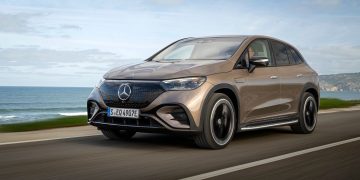
Finally, Mercedes-Benz continues to offer top-tier safety features in its 2025 SUVs, including the Mercedes-Benz GLC and GLE models. These luxury SUVs are equipped with a wide range of advanced driver-assist technologies, including active brake assist, lane-keeping assist, and a 360-degree camera system. Mercedes-Benz’s commitment to safety is evident in the high ratings these models consistently receive in crash tests, and their reputation for luxury and reliability further enhances their appeal.
In conclusion, the 2025 SUV market is full of vehicles that are pushing the boundaries of safety, offering a wide range of advanced technologies and impressive crash test results. Whether it’s through innovative driver-assist features, cutting-edge crash prevention systems, or superior structural integrity, these vehicles are setting new standards for safety in the automotive world. With brands like Volvo, Subaru, Honda, Toyota, and Mercedes-Benz leading the charge, drivers can feel more confident than ever in their choice of a 2025 SUV, knowing that their vehicle is designed to provide the highest level of protection in an increasingly complex driving environment.