














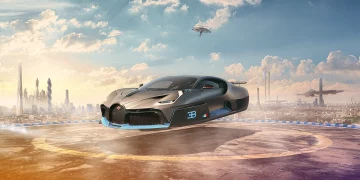

The concept of flying cars has long been a staple of science fiction, evoking images of a future where traffic congestion is a distant memory and the skies are filled with personal, airborne vehicles. However, with the rapid advancements in technology, flying cars are no longer just a dream; they are quickly becoming a reality. As the world struggles with increasing urbanization, traffic congestion, and the limitations of traditional ground transportation, flying cars promise to revolutionize the way we move, offering the potential to overcome many of the limitations of current transportation systems.
But how exactly will flying cars break through the traditional transportation bottlenecks, and how will they enable seamless mobility between the ground and the air? Let’s explore how flying cars will reshape our future.
1. Breaking Free from Traffic Congestion
In today’s cities, one of the biggest challenges facing commuters is traffic congestion. High population density, inadequate public transport, and an over-reliance on cars create traffic jams that waste time, fuel, and contribute to pollution. The concept of flying cars offers a game-changing solution to this growing problem.
a) Vertical Takeoff and Landing (VTOL)
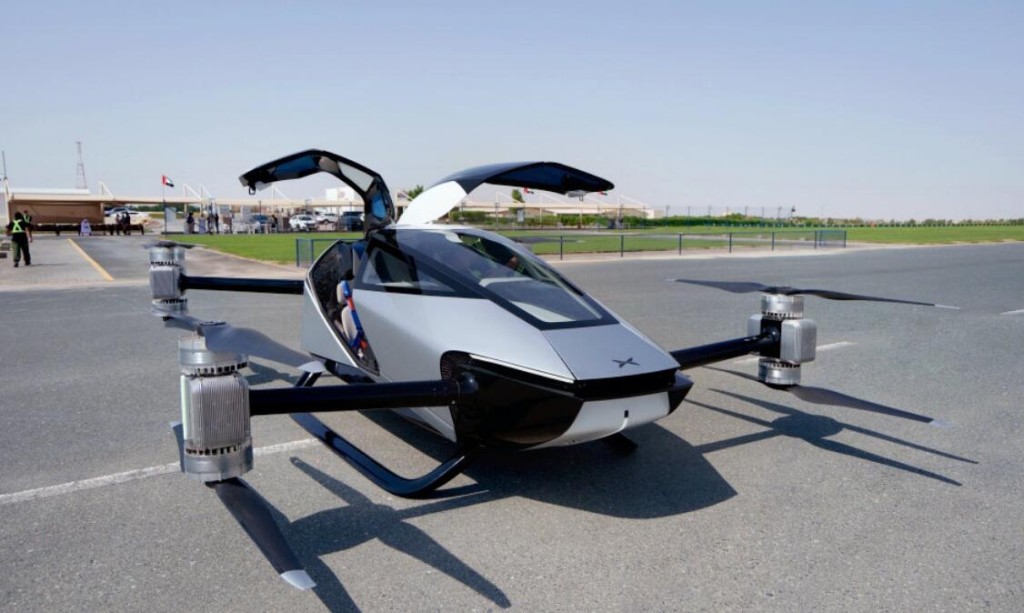
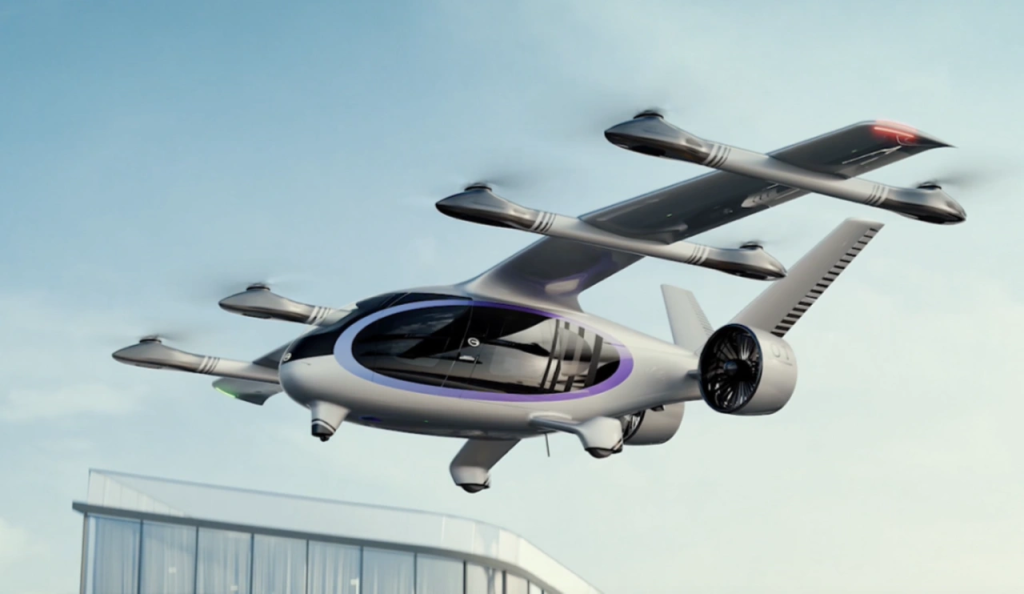
Flying cars will not require traditional runways like conventional aircraft. With Vertical Takeoff and Landing (VTOL) technology, flying cars will take off and land vertically, similar to how a helicopter operates, but with the added benefit of being much smaller and more efficient. This means that flying cars could use existing infrastructure, such as rooftops, designated landing zones, or small vertiports, without needing to take up valuable space on the ground.
- Instant Elevation: In an urban environment where horizontal space is limited, VTOL flying cars will allow individuals to bypass ground traffic by simply taking off and flying above it. This technology enables the vehicles to break free from the physical constraints of road networks, using the third dimension (the sky) to avoid congestion below.
b) Air Traffic Control Systems
As flying cars become more widespread, one of the biggest questions will be how to safely manage them in the sky. Air traffic control systems will evolve to handle this new era of transportation, creating automated flight paths and collision avoidance systems. In the near future, autonomous flight technology will enable flying cars to follow predefined routes that avoid other air traffic, ensuring smooth and safe journeys above our cities.
- Intelligent Flight Paths: These systems will constantly monitor the skies and adjust flight paths in real-time to avoid congestion or any no-fly zones, ensuring that flying cars can seamlessly move from point A to point B without unnecessary delays.
2. Unlocking Faster Commutes: Air and Ground Mobility Combined
Imagine being able to travel from the city center to the outskirts in minutes, bypassing all ground traffic by flying directly above. Flying cars will make it possible to reduce commute times significantly, as long stretches of travel that would have taken hours on the road could be completed in mere minutes in the air.
a) Seamless Transitions Between Air and Ground Travel
Flying cars won’t just be designed for the skies—they will also be capable of driving on the ground, making them the ultimate hybrid vehicle. These vehicles will offer flexible mobility that allows users to travel from home to the airborne departure point, fly across congested areas, and then land on the ground at their destination, ready to continue their journey.
- Last-Mile Connectivity: For short distances, flying cars could easily switch to ground mode, providing last-mile connectivity from the landing pad to the final destination. This means that you won’t have to rely on separate modes of transportation like buses or taxis for the final leg of your journey.
- Direct Access to Destinations: Imagine living in a suburban area and needing to travel to a downtown business meeting. Instead of being stuck in traffic for over an hour, you could simply hop into a flying car, fly above the city, and land near your destination, cutting down travel time and avoiding congestion.
b) High-Speed Travel
Flying cars will make high-speed travel over long distances easier than ever before. These vehicles will be able to fly at speeds that far exceed those of most ground vehicles, making it possible to reach your destination faster than ever.
- Faster than Ground Vehicles: While typical cars travel at speeds of up to 60-70 miles per hour on highways, flying cars could potentially reach 200-300 miles per hour, depending on the model. This immense increase in speed, coupled with the ability to bypass traffic, will transform the way we think about commuting and long-distance travel.
3. Solving Urban Mobility Issues
With urban areas becoming increasingly crowded, cities around the world are struggling to accommodate growing populations. Flying cars offer the potential to alleviate many of the issues associated with dense urban environments, such as traffic jams, pollution, and space constraints.
a) Decongesting Urban Roads
Flying cars will enable cities to decentralize traffic. As they take to the skies, flying cars will dramatically reduce the number of vehicles on the road, opening up more space for public transportation, cycling, and pedestrian use. This shift will likely lead to less pollution, improved air quality, and fewer traffic-related accidents.
- Urban Air Mobility (UAM): Urban Air Mobility refers to the use of flying vehicles for short, urban commutes. Cities could implement vertiports where people can board flying cars for quick, high-speed trips to various parts of the city, bypassing congested highways and busy streets.
b) Reducing Pollution and Emissions
One of the most significant advantages of flying cars is their potential to reduce the environmental impact of transportation. Many flying car designs are focusing on electric propulsion, making them environmentally friendly alternatives to traditional gas-powered vehicles. With zero emissions during flight, electric flying cars could help reduce air pollution in cities.
- Clean Energy Solutions: As electric and hybrid propulsion systems improve, flying cars will be able to offer a cleaner, greener solution to urban transportation. Cities could adopt flying cars as part of a larger effort to transition to sustainable mobility solutions.
4. Addressing Safety and Accessibility
As with any new mode of transportation, safety will be a key concern. Flying cars will need to be equipped with advanced safety systems to ensure that they can operate safely in urban airspace.
a) Autonomous Flight and Advanced Sensors
Flying cars will rely heavily on autonomous flight technology to ensure safe operation. These vehicles will be equipped with advanced sensors that monitor the surrounding environment, detect obstacles, and avoid collisions. With features like automated landing, self-stabilization, and real-time hazard detection, flying cars will be able to navigate through crowded urban environments without compromising safety.
b) Emergency Protocols and Air Traffic Control
In the event of an emergency, flying cars will be equipped with emergency landing capabilities, including automatic parachutes, airbags, or safe landings in designated zones. Additionally, air traffic control systems will ensure that these vehicles are directed away from dangerous airspace, maintaining order in the skies.
5. The Future of Travel: A Seamless, Integrated Transportation System
Flying cars represent the future of integrated transportation systems, where various modes of mobility (cars, trains, planes, and now flying vehicles) work together to create a cohesive, efficient travel experience. The evolution of flying cars will likely coincide with advancements in other transportation technologies, such as hyperloop systems, electric cars, and autonomous vehicles, creating a multi-modal network that allows seamless movement between land, air, and space.
a) Integrated Smart Cities
As flying cars become more commonplace, they could become an integral part of smart cities, where data-driven transportation systems optimize travel routes and manage traffic flow in real-time. The ability to dynamically adjust travel paths based on current conditions (e.g., weather, air traffic, road conditions) will make transportation faster, more efficient, and far less stressful.
b) Mass Adoption of Air Mobility
The widespread adoption of flying cars will not only reshape personal travel but could also transform the logistics and public transportation sectors. Delivery drones, flying taxis, and air ambulances could all become part of the urban air mobility ecosystem, making air travel as routine and accessible as ground travel.
Conclusion: The Sky’s the Limit for Future Transportation
Flying cars represent more than just a technological marvel; they are the key to unlocking a new era of mobility. By breaking traffic bottlenecks, offering seamless integration of air and ground travel, and enabling faster, cleaner, and more efficient commutes, flying cars will revolutionize how we move in the future.
While there are still many challenges to overcome—such as air traffic management, safety regulations, and infrastructure development—the promise of flying cars is undeniable. As the technology matures and becomes more widely available, we can look forward to a future where air and ground mobility are no longer separate but fully integrated, creating a world where traffic jams are a thing of the past, and the sky is truly the limit.